
By Laura Gallant
Part-time study is becoming more popular in Ontario colleges, in part because it offers flexible training options for people looking to upskill, reskill or pursue postsecondary education (PSE) for the first time. In 2022-23, Ontario colleges had the most part-time students (31%), compared to Canadian colleges (26%) and universities in Ontario (14%) and Canada-wide (20%). In addition to a reduced courseload, part-time college study often provides more options for how and when students learn. For example, some programming is self-paced, online or offered on evenings and weekends. Many part-time learners are mature and balance work and family responsibilities, so this flexibility is essential. Interviews with Ontario college representatives revealed that part-time study is an issue of access, and many learners could not pursue PSE otherwise. Part-time study offers a more accessible entrance or return to PSE, and more Ontarians are opting for it. Recent college application data from the Ontario College Application Service (OCAS) shows that the number of part-time applications continues to increase.
Many Ontarians choose part-time college study because of its flexibility and accessibility.
What the Most Recent Application Data Tells Us
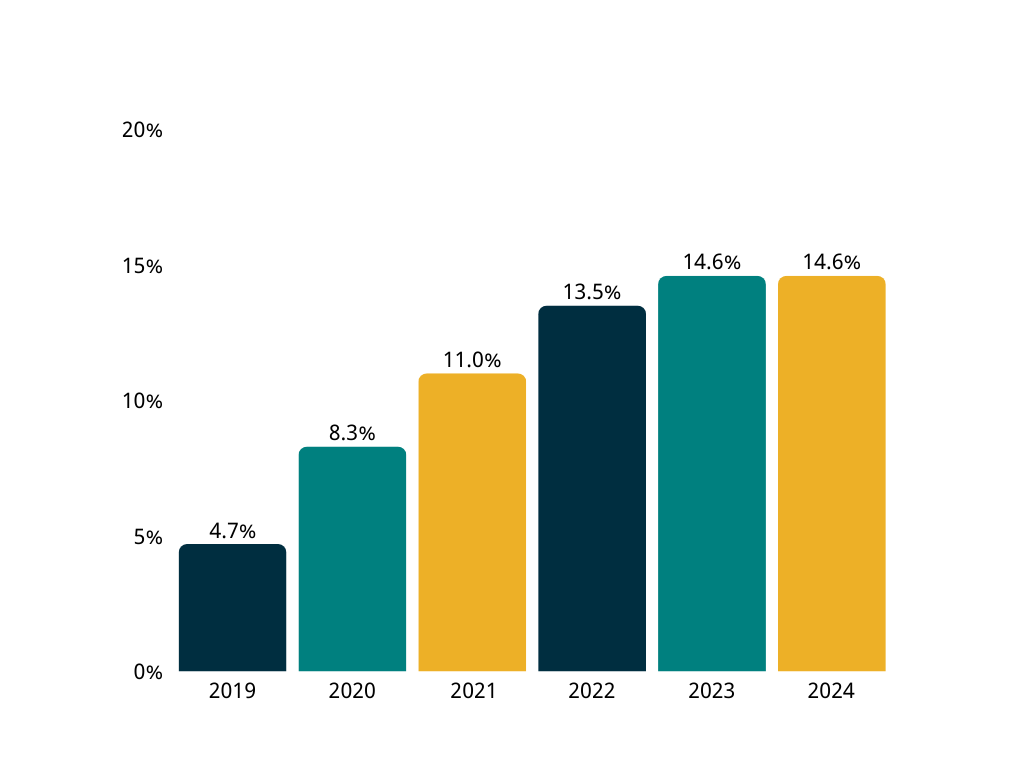
Between 2019 and 2024, the number of part-time applications increased substantially. In 2024, 15% of total college applications through OCAS were for part-time study — up from 5% in 2019 (see the figure below).
Percentage of Ontario College Applications to Part-time Programming
Part-time applicants are choosing programs that align with in-demand professions. Nursing, education and social services programs were some of the most popular choices among part-time applicants between 2019 and 2024. Ontario has critical shortages of nurses, education staff (such as early childhood educators) and social services personnel. Part-time graduates of these programs can offset these shortages and support the health and well being of Ontarians.
Part-time applications are increasing, and applicants are choosing programs that align with in-demand professions.
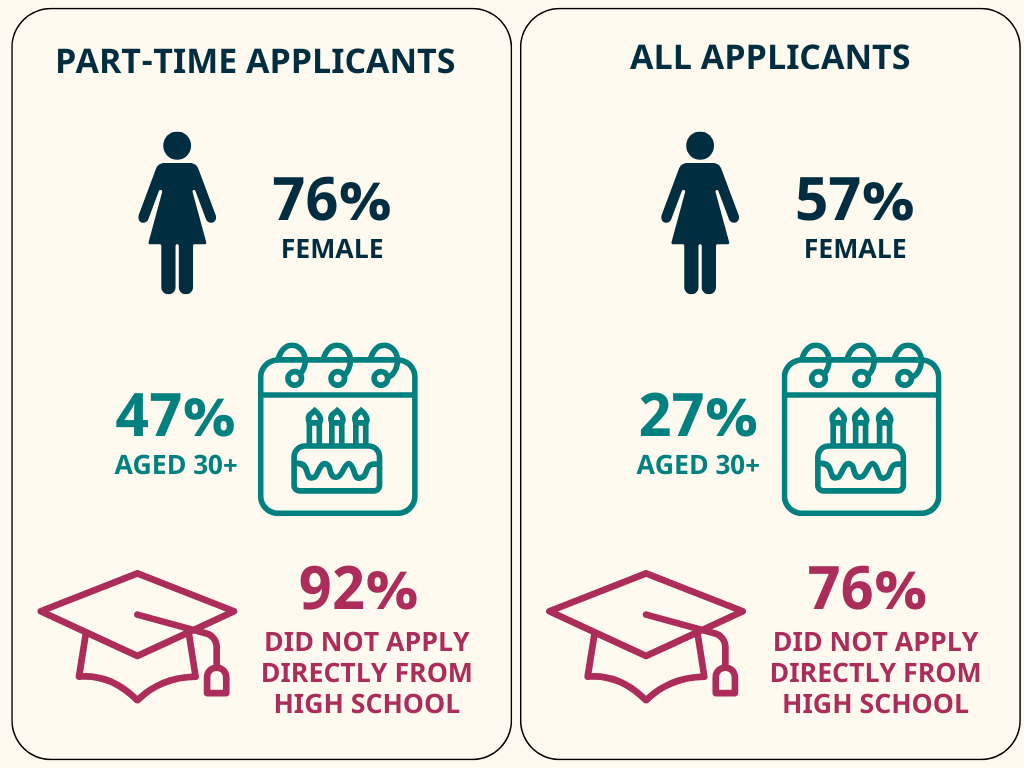
The majority of part-time applicants identified as female and did not apply to college directly out of high school. Most part-time applicants were 30 or older (see the figure below).
How Do Part-time Applicants Compare to the Overall Applicant Pool?
A recent HEQCO report found that most part-time college students were domestic because international students typically need to be full time to meet in-study and post-graduation work permit rules. Another recent HEQCO report found that domestic postsecondary enrollments in Ontario are expected to increase by 45% over the next 24 years. With rising interest in part-time study and a growing domestic population, postsecondary institutions and government should look for ways to enhance the support for part-time programming.
Colleges are struggling financially with limits to international study permits, which adds to the existing problem of underfunding part-time enrollments. An improved funding model would equip colleges to offer the programs part-time students want. There would be a greater mix of enrollment opportunities across the province. And colleges would be well-positioned to offer more supports and services to part-time students.
More Ontarians will need part-time programming to advance their careers and improve their income as the cost of living continues to climb. Many Ontario industries are under threat with newly imposed or proposed American tariffs — such as construction, energy, manufacturing, steel and aluminum and municipal infrastructure — and many workers will need to change careers. A recent Statistics Canada study identified three economic regions in Ontario (London, Kitchener-Waterloo-Barrie and Windsor-Sarnia) where 10% or more of employees are in industries that depend on US demand for Canadian exports. Having a wide selection of part-time program options would help learners access the training they need and support graduates’ financial and career success in the long run.
Part-time study options will help Ontarians upgrade and retrain in response to economic uncertainty.
Expanded part-time study options are consistent with current government priorities around upskilling to address gaps in the labour market. Producing more college graduates will be necessary to keep up with the province’s broader projects, such as creating more housing and infrastructure and meeting healthcare needs. Sustaining part-time college programming is important to the province’s economic and social success. Ontario stands to benefit from this investment.
For more information on HEQCO’s research about why it is important to make part-time college enrollments a top priority, you can read the full report here.